
Claymation Ideas for Beginners: 20 Easy First Projects You Can Finish
The best claymation ideas for beginners are tiny: one simple figure, one movement, a few seconds long. Start with a bouncing ball or a snail sliding across the table, then work up to a walk, a face that changes, and finally a short two-character skit. Here are 20 easy projects in that order, with what each one teaches you.
Quick answer
- Start with one shape and one movement: a bouncing ball, a snail, a worm. 2 to 5 seconds is enough.
- Then try a walk, a face that changes, and an object that transforms. Each teaches one skill.
- Shoot at 12 photos per second, keep the camera fixed and use a lamp instead of window light.
- Only then try a short two-character story. If you want talking clay skits fast, Autoclips Claymation makes them with AI, no clay needed.
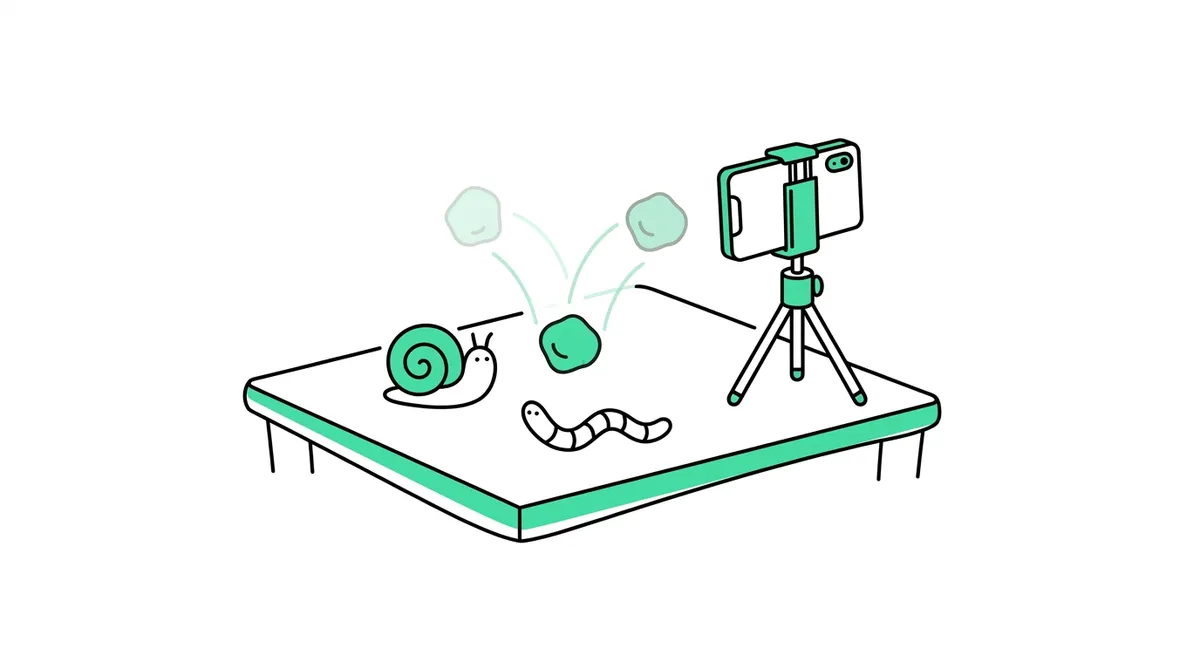
What you need before you start
- Oil-based modelling clay (plasticine). It never dries, so you can reshape it all day. Air-dry clay and play dough crack.
- A phone and a stop motion app with onion skin, which shows the last photo faintly so you know how far to move the clay.
- Something to hold the phone still. A tripod, or tape it to a stack of books.
- A desk lamp. Window light changes every minute and makes the video flicker.
Level 1: one shape, one movement (start here)
Each of these takes 20 to 60 photos and teaches you to move clay in small, even steps.
- A bouncing ball. Squash it flat when it hits the table, stretch it on the way up. The classic first exercise for a reason.
- A snail sliding across the table. Move it a few millimetres per photo and leave a thin clay trail behind it.
- A worm wriggling out of a hole. Bend it into a new curve each frame.
- A ball of clay that turns into a cube. Shape it a little more each photo.
- A melting ice cream. Push it lower and wider each frame until it's a puddle.
Level 2: simple characters
Now add eyes and a reason to move. These teach timing: slow in, fast action, slow out.
- A blob that blinks and looks around. Only the eyes move. Great practice for faces.
- A face that changes mood. Happy to surprised to grumpy, by reshaping the mouth and brows.
- A ladybird that crawls onto a leaf. Small legs, small steps.
- A fish that jumps out of a bowl. Hide a wire or toothpick under it for the frames in the air.
- A snowman that waves. One arm moves; everything else stays still.
Level 3: movement that's a bit harder
- A walk cycle. A simple figure walks across the table. Plan the steps: contact, down, pass, up.
- A character who picks something up. Teaches weight: lean in, grab, lift slowly.
- A flower that grows and opens. Build it up a little each frame.
- Two clay balls that meet and stick together. Easy, and it reads as a tiny love story.
- A monster that pops out of a box. Anticipation, then a fast pop, then a hold.
Level 4: your first tiny story
Two characters, one set, under 30 seconds, ending on a joke or a look. For whole plots with endings, see clay animation story ideas; for viral skit premises, see claymation video ideas.
- A cookie heist. A clay mouse sneaks to a cookie; the cat is already waiting.
- A race. A snail and a rabbit line up; the snail wins by riding a toy car.
- A birthday surprise. A cake for a grumpy blob, who tries hard not to smile.
- A monster under the bed who is more scared of the kid than the kid is of him.
- Two friends and the last slice of pizza. They argue, then a third one eats it.
Beginner mistakes to avoid
- Too big a story. Five characters and three sets is a summer's work. Finish small first.
- Moving too much per photo. Big jumps look jerky. Small, even steps look smooth.
- A camera that moves. Even a tiny bump makes the whole video shake.
- Fingerprints and fluff. Wipe your hands and keep a cocktail stick for small details.
- Recording dialogue first and forgetting the mouths. Start with no talking, add sound at the end.
Want talking clay skits without the photos?
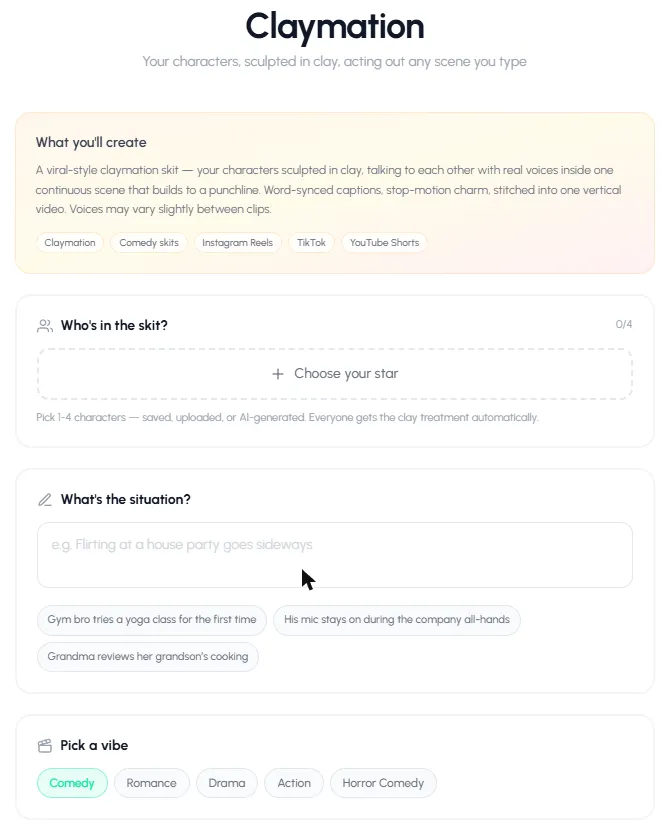
Handmade claymation is a great skill. If you also want to post talking clay skits on TikTok, Reels or Shorts every week, AI can do that part. In Autoclips Claymation, you choose 1 to 4 characters (saved, uploaded or made by AI) and they're sculpted in clay automatically. Type the situation in one line and pick a vibe: Comedy, Romance, Drama, Action or Horror Comedy.
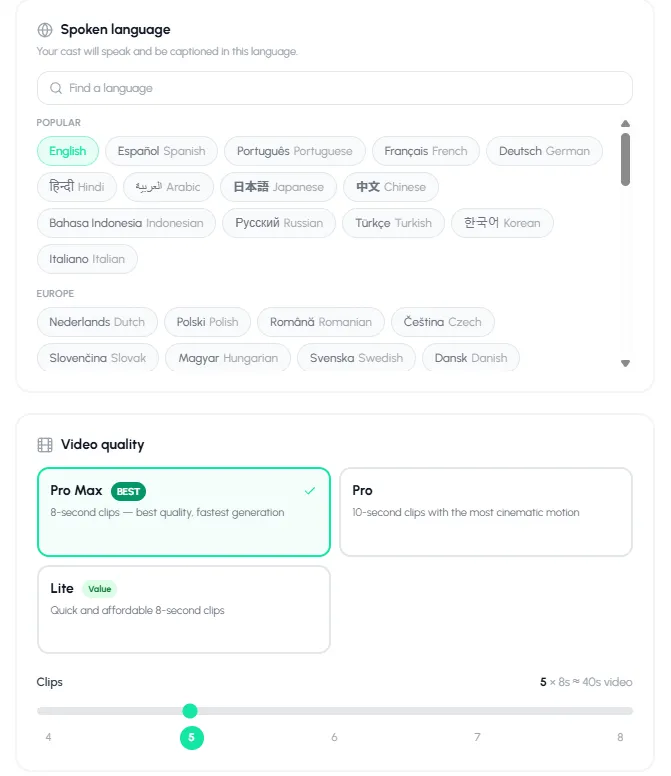
Then pick the spoken language, the quality (Pro Max, Pro or Lite) and 4 to 8 clips. The AI writes the lines, makes the characters talk, adds word-synced captions and joins it into one vertical video. You're charged per clip as each finishes, and failed clips are never charged.
Try one of the Level 4 stories as a talking clay skit.
Open ClaymationComparing stop motion apps with AI? Read clay animation maker. The full AI walkthrough is how to make claymation videos with AI.
Frequently asked questions
What is the easiest thing to make in claymation?
A bouncing ball. It's one shape and one movement, and it teaches the two basics: moving the clay in small even steps, and squashing and stretching to show weight. Next easiest is a snail or worm moving across the table.
What do I need to start claymation?
Oil-based modelling clay, a phone with a stop motion app, something to hold the phone still, and a desk lamp. That's enough for every project on this page.
How many frames per second should I use for claymation?
12 frames per second is the usual beginner choice: one second of video is 12 photos. 24 is smoother but doubles the work.
What clay is best for claymation beginners?
Oil-based modelling clay (plasticine). It doesn't dry out, so you can reshape it for hours. Avoid air-dry clay and play dough, which crack and crumble under lights.
How long does a beginner claymation take?
A 3 second bouncing ball is about 36 photos and can be done in an afternoon. A 30 second two-character story is around 360 photos plus sound, so plan a few days.
Can I make claymation on my phone?
Yes. Stop motion apps run on phones and tablets. For talking clay skits without real clay, Autoclips Claymation also works in your phone's browser.
Skip straight to the skit
Pick characters, type what happens, and Autoclips makes a talking clay video. Then go back to the bouncing ball when you're ready.
Try AI claymationAyaz Alam · Founder of Autoclips
Ayaz builds Autoclips and makes the tutorials on its YouTube channel. Every step in these guides is tested in the app before it is published.