
How to Make Money Clipping: How Paid Clipping Works and What It Really Pays
To make money clipping, you join a creator's clipping campaign, cut short clips from their streams or podcasts, post them on your own TikTok, Shorts or Reels accounts, and get paid for the views your clips get, most often around $1 per 1,000 views on marketplaces like Whop's Content Rewards. It's real but uneven: budgets run out, rates vary and most clips earn little. Here's how it works, what people report earning, and how to clip faster.
Quick answer
- Creators and brands post clipping campaigns with a budget and a rate per 1,000 views. You clip their content, post it, and submit your post.
- Reported rates are mostly about $0.50 to $1.50 per 1,000 views, often around $1, with a platform fee (Content Rewards says it takes 10%).
- Only views on your own post count, and they only pay while the campaign budget lasts.
- Speed and volume matter: the more good clips you post, the more chances one takes off. An AI clip maker helps with the cutting.
- Only clip content you have permission to use. A campaign is that permission; random creators' videos are not.
What clipping is
Big streamers, podcasters and brands want their content all over TikTok, Shorts and Reels, but can't post 50 clips a day themselves. So they pay "clippers" to do it. You cut the best moments, post them on your own accounts, and get paid for the views. It's become one of the most talked-about side hustles of the last two years.
How paid clipping works, step by step
- 1
Find a clipping campaign
Marketplaces such as Whop's Content Rewards list campaigns: whose content, which platforms, the rate per 1,000 views, the budget and the rules. Some creators also run their own programs through Discord.
- 2
Read the rules
Campaigns set what counts: minimum length, captions, a tag or link, no reposting the same clip, which platforms. Breaking them gets a submission rejected.
- 3
Make the clips
Download the source the campaign gives you, or use the creator's videos they allow. Find the best moments, cut 15 to 90 seconds, frame vertical and add captions.
This is where most of the time goes. An AI clip maker does the finding, framing and captions: upload the video, tick that you have permission, and get scored clips to choose from.
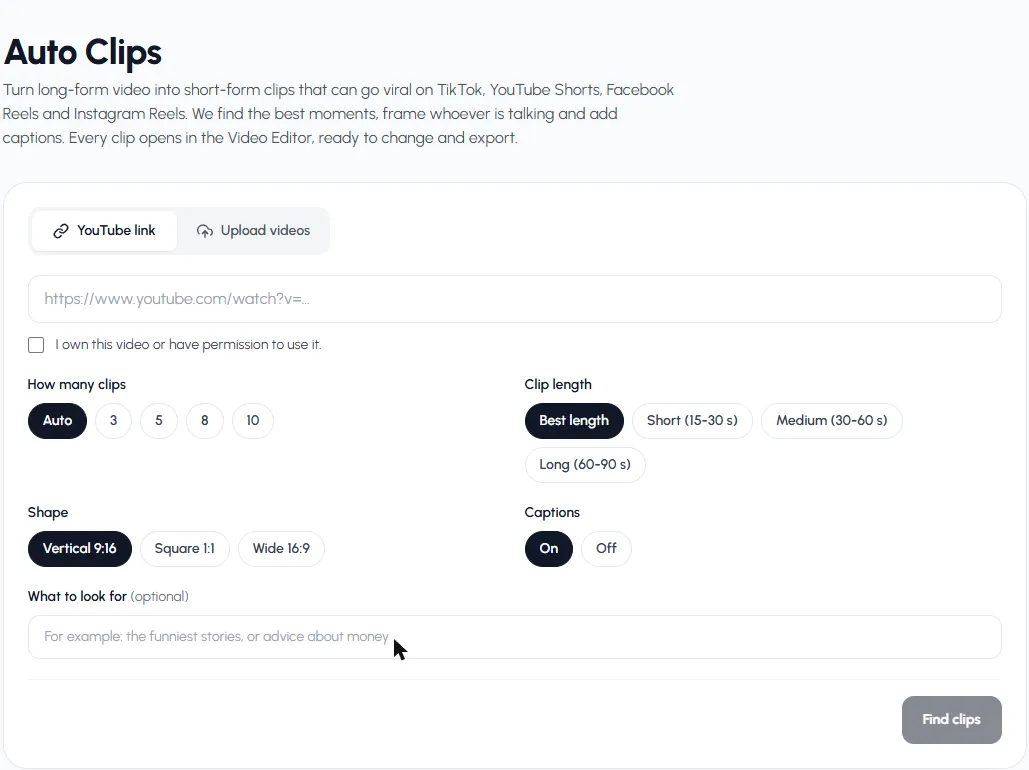
Tick the permission box: a clipping campaign is your permission. - 4
Post on your own accounts
Post to the platforms the campaign pays for, usually TikTok, Instagram Reels and YouTube Shorts. Only views on your post count, not views on the original.
- 5
Submit and get paid
Submit each post's link to the campaign. Views are checked and paid while the budget lasts, minus the platform's fee.
How much do clippers make?
| What | What people report |
|---|---|
| Rate per 1,000 views | Mostly $0.50 to $1.50; around $1 is common, some campaigns pay more |
| Platform fee | Content Rewards says it takes 10% of each payout on view-based campaigns |
| A clip with 10,000 views | Roughly $5 to $15 before fees |
| A clip with 1 million views | Roughly $500 to $1,500, if the budget hasn't run out |
Sources: Content Rewards on what clippers make and Socialync on pay-per-view campaigns. Many guides about clipping are written by tools that sell to clippers, including this one, so treat big earnings screenshots with care.
How to clip faster
Clipping is a volume game, and the slow part is finding moments in long streams. In Autoclips you upload the video (or paste a link you have permission for), pick how many clips (up to 10 per run) and how long, and it returns clips framed on the speaker with captions and a score from 0 to 100, so you can post the strongest first.
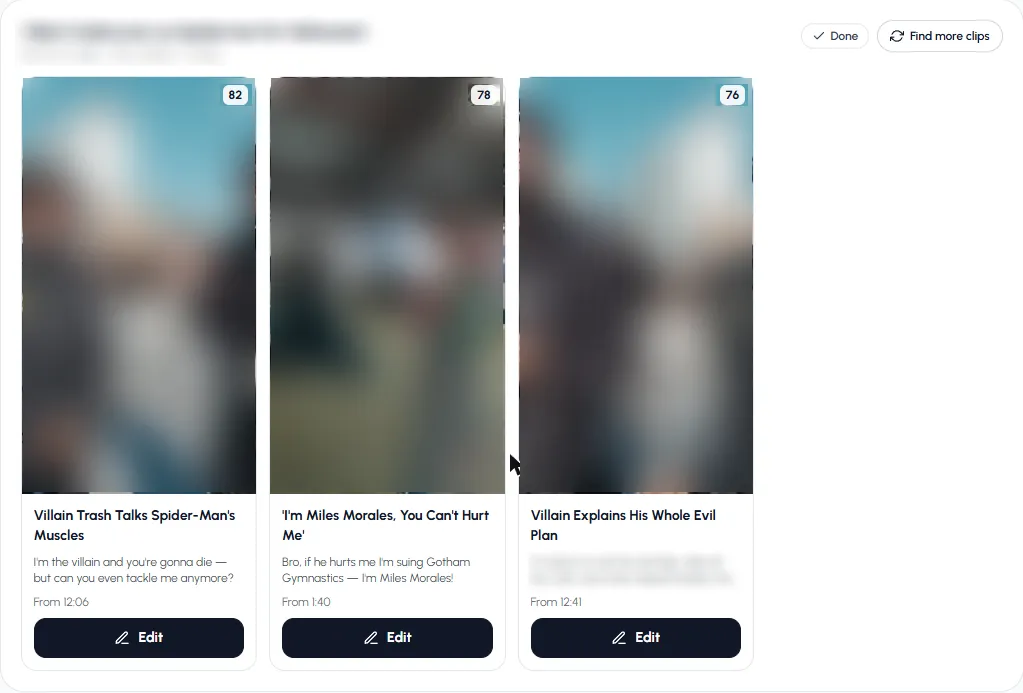
Upload one stream or podcast and see how many clips it finds.
Find clipsTips from what works
- Pick campaigns with big budgets and clear rules. Fewer surprises.
- Post fast after a stream. The first clips of a big moment get the views.
- Hook in the first second. Start on the line, not the setup.
- Caption everything. It's usually required, and it helps on mute.
- Run several accounts per niche, if the campaign allows, so one creator's clips don't flood one feed.
- Track your rate. Views per clip and money per hour tell you which campaigns are worth it.
More on getting views in how to go viral on TikTok and on timing in the best time to post YouTube Shorts. The tool side is in AI clip maker.
Frequently asked questions
How do you make money clipping?
Join a clipping campaign from a creator or brand, cut short clips from their content, post them on your own accounts, and submit the posts. You're paid per 1,000 views your posts get, while the campaign budget lasts.
How much do clippers get paid per 1,000 views?
Reported rates are mostly about $0.50 to $1.50 per 1,000 views, with around $1 being common. Platforms take a fee; Content Rewards says it takes 10% on view-based campaigns.
Is clipping a real way to make money?
Yes, people do get paid, but earnings are uneven. Most clips earn little, budgets run out, and a few viral clips make most of the money.
Do I need permission to clip someone's videos?
Yes. A clipping campaign gives you permission for that creator's content under its rules. Clipping and posting other people's videos without permission can get your posts removed.
What tools do clippers use?
A video editor for cutting and captions, and often an AI clip maker that finds the moments, frames the speaker and adds captions automatically, which saves the most time.
Do I need followers to start clipping?
Not usually. Campaigns pay for views, and short-video feeds show clips to people who don't follow you. Some campaigns set their own minimums, so check the rules.
Spend your time posting, not watching
Autoclips finds the moments in a long video, frames the speaker and adds captions, so you can post more clips.
Clip faster with AIAyaz Alam · Founder of Autoclips
Ayaz builds Autoclips and makes the tutorials on its YouTube channel. Every step in these guides is tested in the app before it is published.